:::

00:07:03
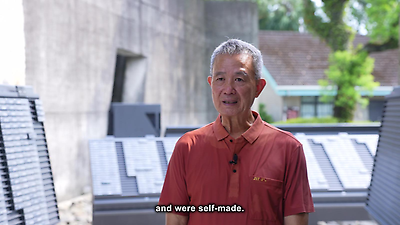
Huang Kun-Neng (黃坤能) Oral History (Eng sub, short version)
- 國家人權博物館
- Born in Chiayi in 1954, he did not continue his studies after graduation from elementary school. In 1970, he went to Taipei to look for a job, where he knew Cheng Ping indirectly and became a member of the "Taiwan Independence Revolutionary Army." led by Cheng in 1972.
In 1973, he was arrested at the "Prince Hotel" in Kaohsiung for his involvement in the "Taiwan Independence Party Cheng Ping and others case". In 1974, he was accused of "initiating acts with the intent to overthrow the government by illegal means", and was sentenced to death, later commuted to life imprisonment. In 1975, his sentence was commuted to 15 years of fixed-term imprisonment. He was granted parole in 1987 and detained for about 13 years and 3 months.
After being released, he continued to participate in Tangwai movements (opposition democratic movement) and joined political organizations. He has been involved in high-altitude mountaineering activities and rescue operations since 2008. He believes that the situation of family members outside is more difficult than that of political prisoners, and their stories should be recorded and preserved.
01:11:37
Huang Kun-Neng (黃坤能) Oral History (Eng sub)
- 國家人權博物館
- Born in Chiayi in 1954, he did not continue his studies after graduation from elementary school. In 1970, he went to Taipei to look for a job, where he knew Cheng Ping indirectly and became a member of the "Taiwan Independence Revolutionary Army." led by Cheng in 1972.
In 1973, he was arrested at the "Prince Hotel" in Kaohsiung for his involvement in the "Taiwan Independence Party Cheng Ping and others case". In 1974, he was accused of "initiating acts with the intent to overthrow the government by illegal means", and was sentenced to death, later commuted to life imprisonment. In 1975, his sentence was commuted to 15 years of fixed-term imprisonment. He was granted parole in 1987 and detained for about 13 years and 3 months.
After being released, he continued to participate in Tangwai movements (opposition democratic movement) and joined political organizations. He has been involved in high-altitude mountaineering activities and rescue operations since 2008. He believes that the situation of family members outside is more difficult than that of political prisoners, and their stories should be recorded and preserved.
00:06:01
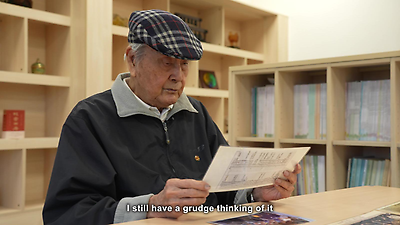
Chang Tsang-Han (張滄漢) Oral History (Eng sub, short version)
- 國家人權博物館
- Born in Tainan City in 1929, he had excellent academic performance since childhood and graduated from the Department of Economics of National Taiwan University in 1952.
In 1956, while working as a clerk at the Chang Hwa Bank Chengnei Branch, he was accused of participating in the case of "Tainan City Committee Post and Telecommunications Branch Wu Li-shui case" and was charged with "knowing but failing to report an espionage," sentenced to 7 years of fixed-term imprisonment. He was released on bail in 1960, detained for about 3 years and 8 months in prison.
After returning to society, he married Wang Mei-hui, the daughter of Wang Tian-teng, a victim of the February 28 Incident. They had three daughters and one son. He once worked at the Ta Jung Steel Mill, which was operated by another political prisoner Li Tien-sheng.
Until the day he saw at the exhibition "Miserable Martial Law Period: Political Cases in Martial Law Period," and after online inquiry, he then realized, under unknown condition, how he was accused of involving in the case and the sufferings of his school mates and friends.

01:02:10
Chang Tsang-Han (張滄漢) Oral History (Eng sub)
- 國家人權博物館
- Born in Tainan City in 1929, he had excellent academic performance since childhood and graduated from the Department of Economics of National Taiwan University in 1952.
In 1956, while working as a clerk at the Chang Hwa Bank Chengnei Branch, he was accused of participating in the case of "Tainan City Committee Post and Telecommunications Branch Wu Li-shui case" and was charged with "knowing but failing to report an espionage," sentenced to 7 years of fixed-term imprisonment. He was released on bail in 1960, detained for about 3 years and 8 months in prison.
After returning to society, he married Wang Mei-hui, the daughter of Wang Tian-teng, a victim of the February 28 Incident. They had three daughters and one son. He once worked at the Ta Jung Steel Mill, which was operated by another political prisoner Li Tien-sheng.
Until the day he saw at the exhibition "Miserable Martial Law Period: Political Cases in Martial Law Period," and after online inquiry, he then realized, under unknown condition, how he was accused of involving in the case and the sufferings of his school mates and friends.
:::


